

德国公司年审税务申报合规维护指南
obligations; ongoing maintenance is required. Whether a business is structured as a GmbH (limited liability company), a UG (*unternehmergesellschaft*—a "mini" limited liability company), or another legal form, it must fulfill annual financial, tax, and information-reporting requirements in accordance with German law. For Chinese enterprises engaged in trade, cross-border e-commerce, international investment, holding structures, or operational activities in Germany, annual compliance is critical. It not only determines the legality of continued operations but also impacts the use of bank accounts, tax standing, commercial partnerships, and future processes such as equity transfers or company dissolution.
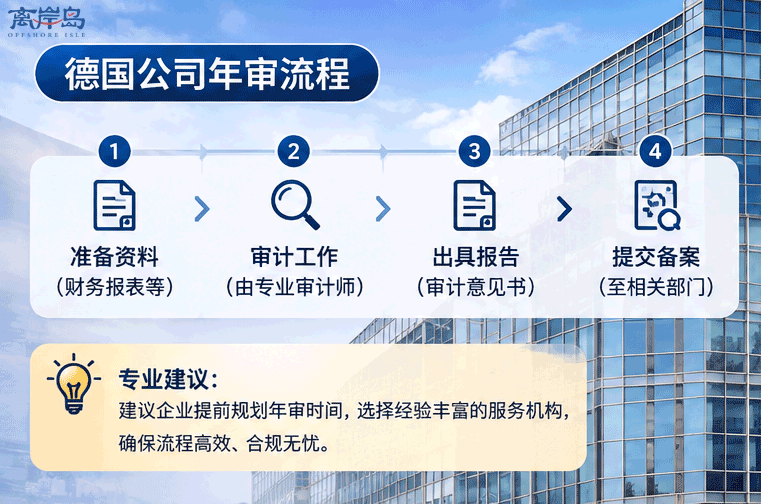
The registration of a company in Germany does not mark the end of one’s obligations; ongoing maintenance is required. Whether a business is structured as a GmbH (limited liability company), a UG (*unternehmergesellschaft*—a "mini" limited liability company), or another legal form, it must fulfill annual financial, tax, and information-reporting requirements in accordance with German law. For Chinese enterprises engaged in trade, cross-border e-commerce, international investment, holding structures, or operational activities in Germany, annual compliance is critical. It not only determines the legality of continued operations but also impacts the use of bank accounts, tax standing, commercial partnerships, and future processes such as equity transfers or company dissolution.
I. What is the Annual Compliance/Audit Process for German Companies?
In the German context, "annual compliance" (often referred to as an "annual audit" or "annual review") generally refers to the obligations a company must meet following the close of each fiscal year. This includes conducting annual financial accounting, preparing annual financial statements, filing tax returns, and fulfilling statutory disclosure requirements—all in accordance with the German Commercial Code (*Handelsgesetzbuch* – HGB), the Limited Liability Companies Act (*GmbHG*), and relevant tax laws.
Ongoing annual maintenance for a German company typically encompasses the following areas:
1. Annual Financial Statements (*Jahresabschluss*): Compiling the company’s annual revenue, expenses, assets, liabilities, and operating profits to produce documents such as the balance sheet and the profit and loss statement.
2. Disclosure of Financial Statements (*Offenlegung*): Companies meeting specific criteria are required to submit their annual financial statements to the German company register (the Unternehmensregister).
3. Corporate Income Tax (*Körperschaftsteuer*): Filing corporate income tax returns based on the company’s actual business operations and taxable income.
4. Trade Tax (*Gewerbesteuer*): Fulfilling trade tax filing obligations based on the company’s business location and taxable operating profit.
5. Value-Added Tax (VAT) (*Umsatzsteuer*): Submitting VAT returns—on a monthly, quarterly, or annual basis—depending on the company’s specific VAT filing obligations.
6. Shareholder and Internal Corporate Resolutions: Completing internal procedures, such as the formal approval of annual financial statements and decisions regarding profit distribution, in accordance with the company’s legal form and applicable regulations.
7. Maintenance of Corporate Information: Verifying registered address details, the status of managing directors (*Geschäftsführer*), shareholders, and ultimate beneficial owners (UBOs), and ensuring that any changes are promptly reported to the relevant authorities. II. Which German companies are required to undergo an annual review?
GmbH (Limited Liability Company): Must prepare annual financial statements and fulfill tax filing and financial disclosure obligations.
UG (Mini-GmbH/Small Limited Liability Company): Must prepare annual financial statements and fulfill tax filing and disclosure obligations.
AG (Public Limited Company/Joint-Stock Company): Must fulfill obligations related to annual financial reporting, auditing, and disclosure.
GmbH & Co. KG: Generally required to fulfill corresponding financial reporting and disclosure obligations.
OHG / KG (Partnerships): Specific obligations depend on the partners' liability structure and the size of the business.
Branches of foreign companies in Germany: Obligations are determined based on German regulations for branches, as well as the legal and financial status of the foreign parent company.
III. What does the annual review for a German company typically entail?
1. Preparation of annual financial statements.
2. Disclosure of annual financial statements.
3. Filing of corporate income tax returns.
4. Filing of trade tax (Gewerbesteuer) returns.
5. Filing of value-added tax (VAT) returns.
IV. What documentation is required for a German company's annual review?
Basic company information: Certificate of incorporation, commercial register extract, and articles of association.
Shareholder information: List of shareholders, equity structure, and documentation regarding any changes.
Director information: Identification details and appointment status of directors.
Banking information: Annual bank statements and account transaction records.
Financial records: Comprehensive records of annual income, expenditures, procurement, and sales.
Business documentation: Sales and purchase contracts, invoices, and supporting business vouchers.
Tax documentation: VAT filing records, tax identification numbers, and relevant tax notices.
Asset information: Fixed assets, inventory, accounts receivable, and accounts payable.
Other information: Records of shareholder loans, related-party transactions, and profit distribution.
V. The annual review process for a German company
Step 1: Verify the company’s status – Confirm the registration details, registered address, directors, shareholders, and current operational status of the German company.
Step 2: Collect annual financial data – Compile bank statements, records of income and expenditures, business contracts, invoices, and other financial supporting documents.
Step 3: Prepare annual financial statements – Draft the balance sheet, profit and loss statement, and other required documents in accordance with German accounting standards and applicable regulations. Step 4: Complete the shareholder approval process: In accordance with the company type and applicable legal requirements, obtain approval for the annual financial statements and pass resolutions regarding profit distribution.
Step 5: Handle tax filings: Complete the necessary tax declarations—such as corporate income tax, trade tax, and value-added tax (VAT)—based on the company’s specific circumstances.
Step 6: Submit annual financial statements: Disclose or file the relevant financial statements via the German company registration platform (e.g., the Unternehmensregister).
Step 7: Review annual compliance status: Verify filing records, tax notices, financial documentation, and other ongoing compliance requirements.
VI. Frequently Asked Questions Regarding Annual Compliance for German Companies
Q1: Are German GmbH (limited liability companies) required to undergo an annual review every year?
A1: German GmbH entities are generally required to prepare annual financial statements and fulfill obligations related to tax filings and the disclosure of financial statements, in accordance with applicable regulations. Specific requirements depend on the size of the company, its fiscal year, and its operational status.
Q2: Are German UG companies subject to annual compliance requirements?
A2: Yes. A UG (haftungsbeschränkt)—a specific form of German limited liability company—is generally required to prepare annual financial statements, submit tax filings, and fulfill financial disclosure obligations.
Q3: Can a German company skip its annual compliance requirements if it is not conducting any business?
A3: Not necessarily. Even if a German company has no operating revenue, it may still be required to prepare annual financial statements and fulfill tax filing and financial disclosure obligations. Whether simplified procedures apply depends on the specific circumstances.
Q4: Is the annual compliance deadline for German companies always December 31st?
A4: No. There is no single, universal annual compliance deadline (such as December 31st) that applies to all German enterprises.
For example, for a GmbH that follows the calendar year, the financial statements for the 2026 fiscal year would typically need to be completed in 2027, with the disclosure obligation generally required to be met by December 31, 2027. Tax filings are subject to their own separate deadlines.
This page summarises publicly available regulations for general reference only and does not constitute legal or tax advice. Rules in each jurisdiction may change at any time; please confirm the latest position with an Offshore Isle advisor.